Maanak
Checking package labels, with the evidence kept
- My role
- Design and development
- Made for
- Legal Metrology inspection officers, and shoppers who want to report a wrongly labelled product.
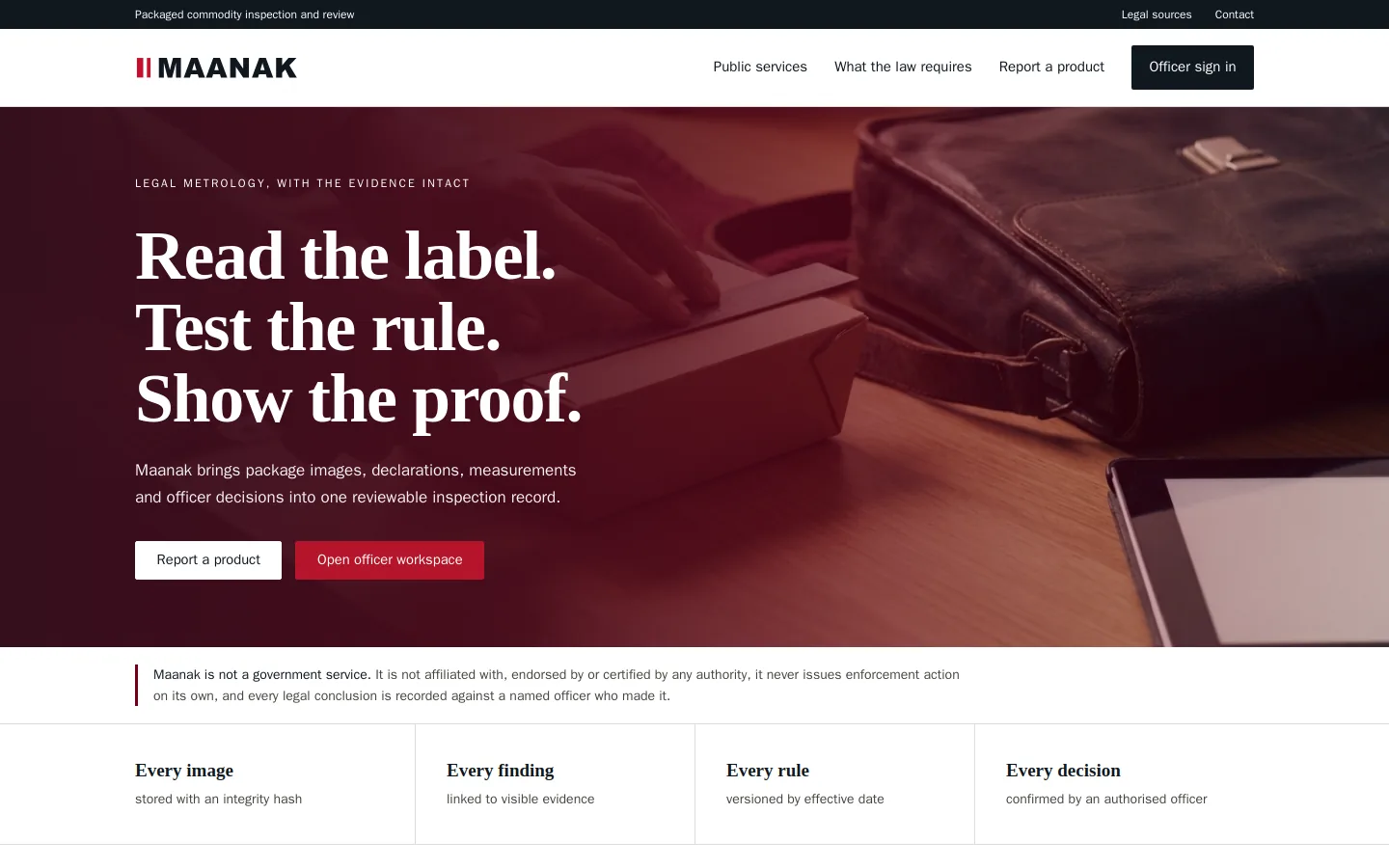
Maanak is not a government service. It is not linked to or approved by any authority, and its rule texts stay drafts until a qualified authority confirms them.
What it is
In India, packaged goods must show certain details on the label, such as the maximum retail price, the net quantity and who made the product. Checking this by hand is slow, and handwritten notes are easy to dispute.
Maanak turns a photo of a package into an inspection record. The original photo is kept unchanged next to everything read from it, and every decision is recorded against the officer who made it.
What it does
Photo checks before anything is saved
The app looks for blur, glare, poor framing and other problems, and tells the officer in plain words what to fix.
Reads labels in English and Hindi
It finds the price, net quantity, unit price, maker, customer care details, country of origin, date and batch.
The officer stays in charge
Each reading appears beside the part of the photo it came from, so the officer can confirm, correct or reject it. Only values the officer has reviewed are checked against the rules.
Honest results
A panel that is missing from the photo is never counted as a violation. The app says it needs more evidence, or that it cannot tell, instead of guessing.
Reports anyone can verify
Each report has a reference and a code. Anyone can check that it was issued and has not changed, without seeing the case.
Services for the public
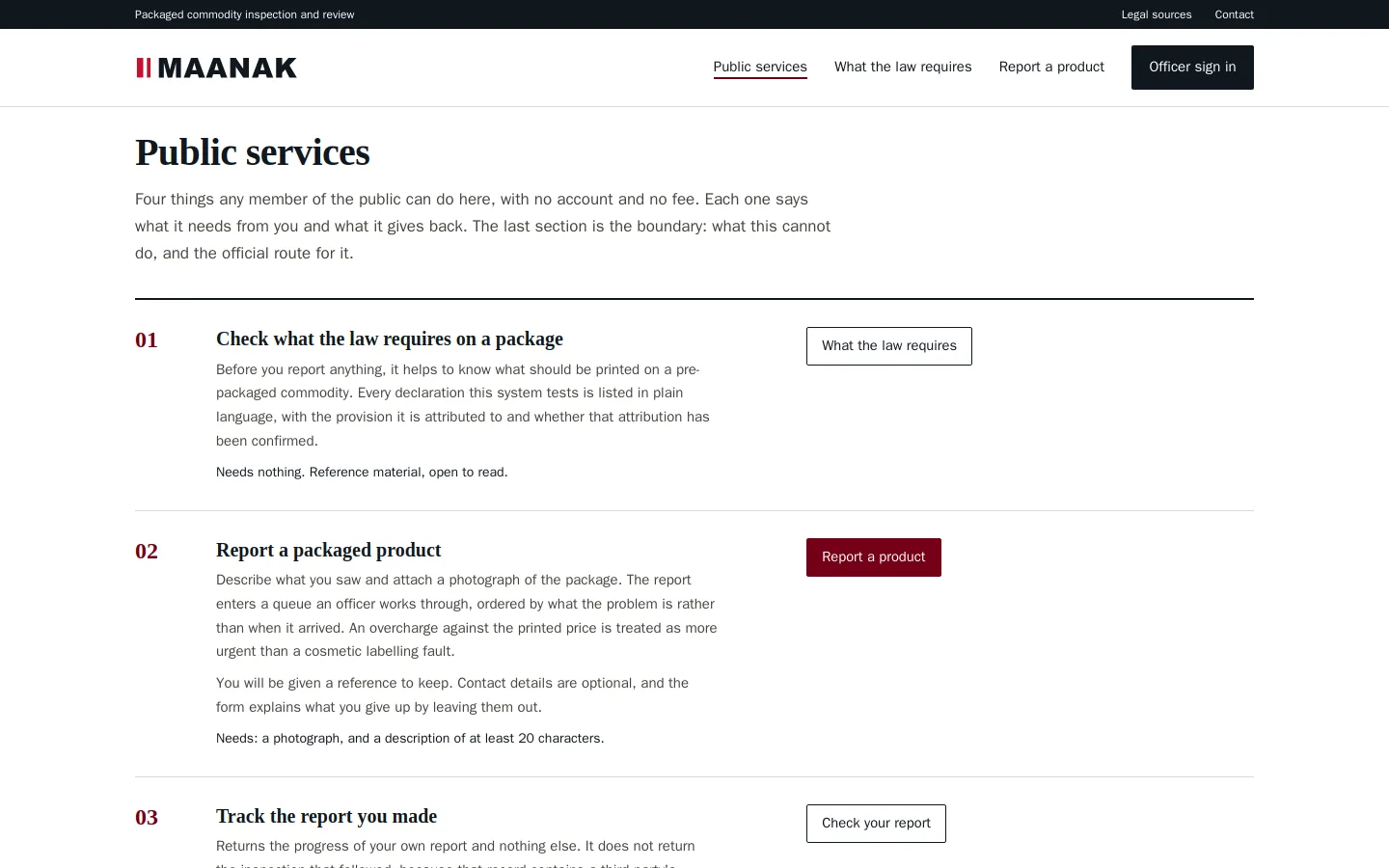
Without an account, anyone can read what a label must show, report a product, track their report or verify a report.
Screenshots
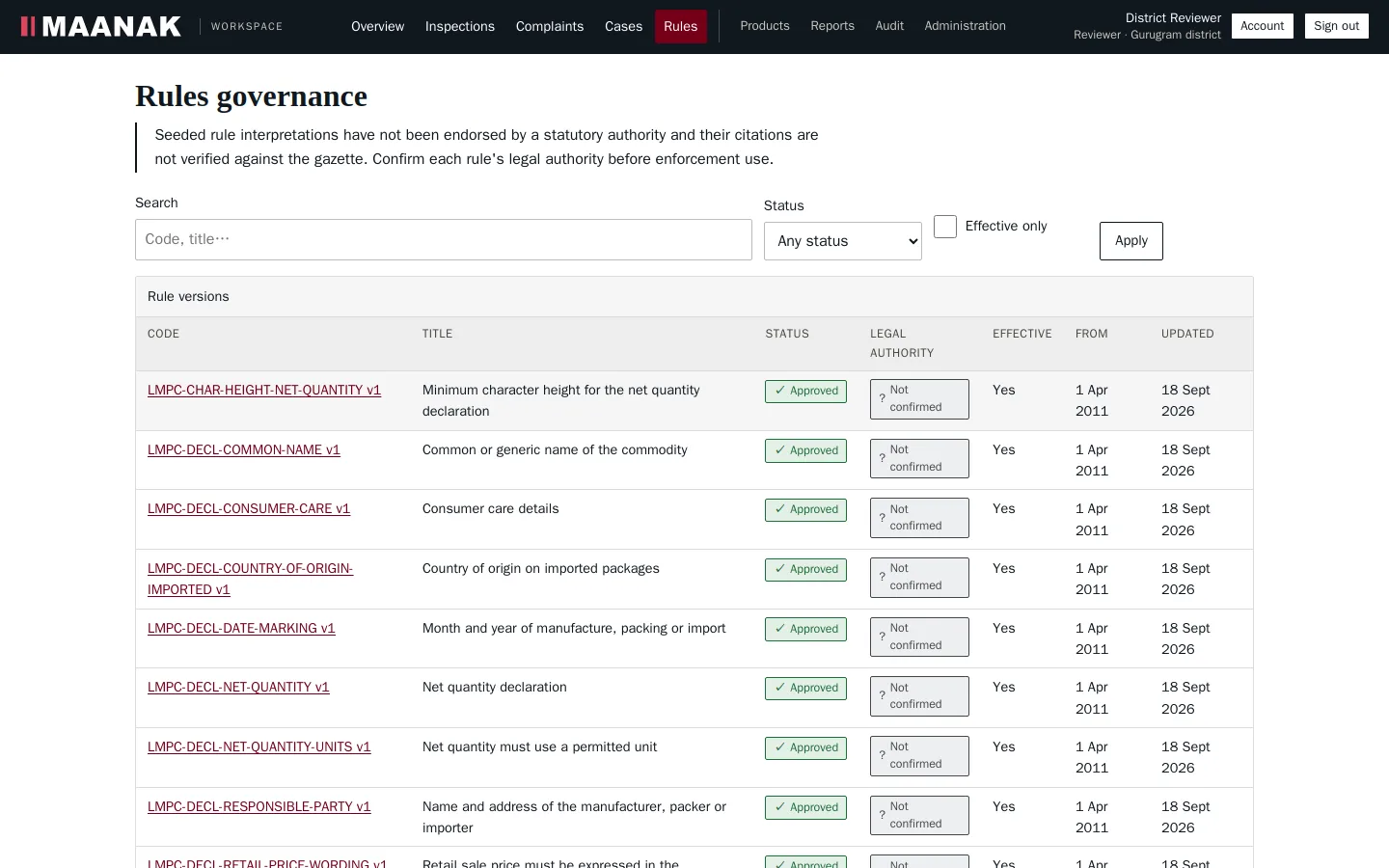
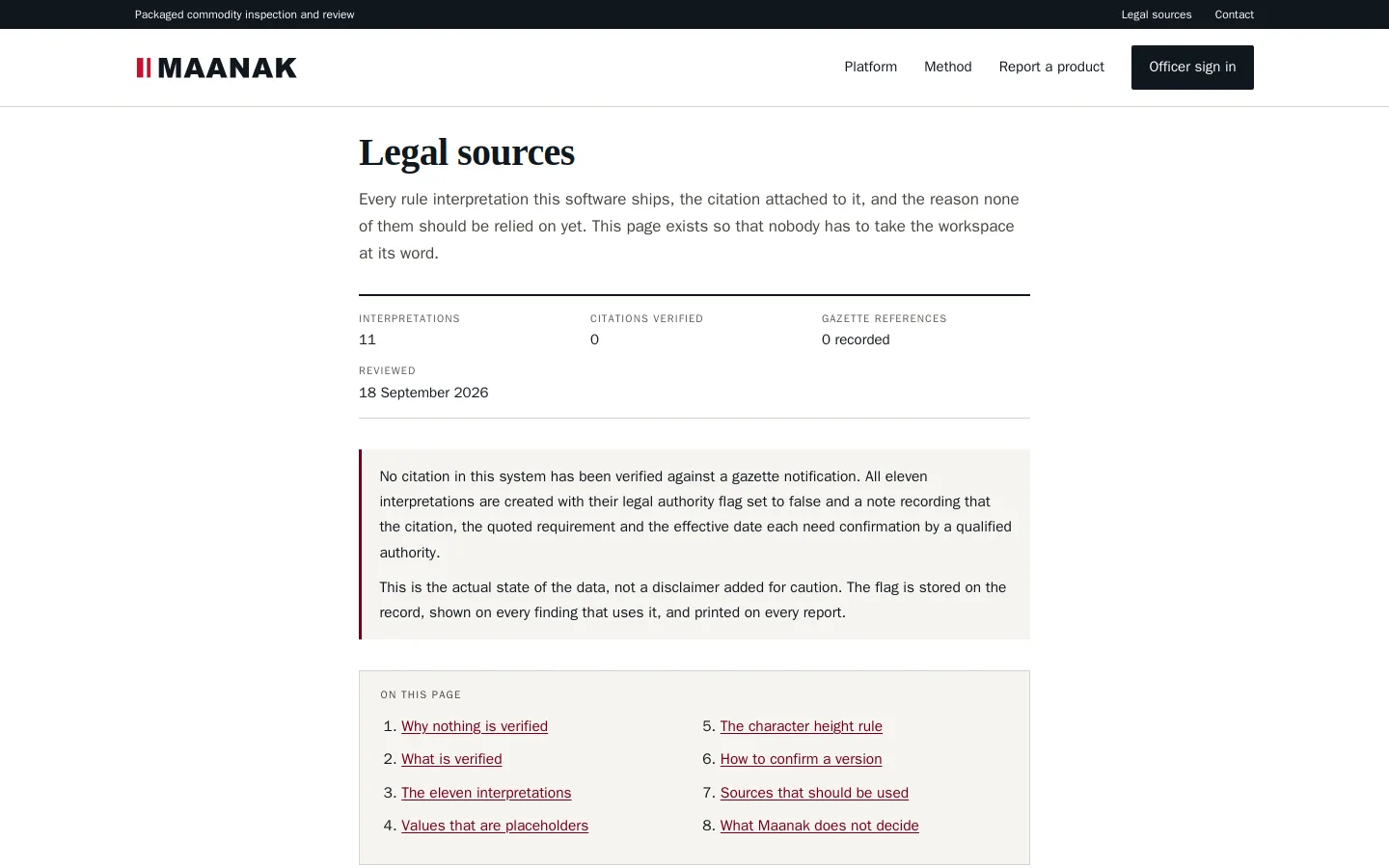
Screenshots come from a local demo with sample data.
How it is built
A Python API built with FastAPI, plus a background worker that reads labels with Tesseract OCR, so nobody waits while a photo is read. Records live in PostgreSQL, photos in encrypted storage, and the whole system runs with Docker Compose.
The interface is plain HTML, CSS and JavaScript with no framework, under a strict content security policy.
Each photo gets a SHA-256 fingerprint when it arrives, so any later change to it would show.
- Python
- FastAPI
- PostgreSQL
- Redis
- MinIO
- Tesseract OCR
- Docker Compose
- Nginx